JOHN LYE GIBB
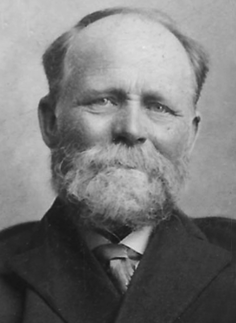
John Lye Gibb
|

Sarah Smith Gibb
|
John Lye was born in England in 1848. He married Sarah Ann Phillips Smith in 1867 in Wales. John struggled to find work where they lived and moved his family to Ireland when the country was looking for ways to expand their economy. John, having apprenticed and worked with his father, was an excellent shoemaker and he used these skills to build a life there for his family. After moving to Ireland, John had as many as 20 apprentices that he taught this trade to, and his business prospered. John and Sarah saved what money they had and after a few years moved to Utah with their young family in 1875. They settled in Lehi and John opened his own shoe store. In 1878, John married Hannah Simmons, a close friend and neighbor of the Gibbs. In 1899, John Lye Gibb (50) and his wife Sarah A. Smith were called by the Church to move from Lehi, Utah, to the District of Alberta in the North West Territories of Canada where they were to settle in the village of Magrath, a yet undeveloped community. Since John could only bring one of his wives with him into the country, it was agreed by mutual consent that the second Hannah would remain with their nine children near her family in the United States. Their first home in Alberta was a dugout in the side of a hill, with a slab roof and a dirt floor. For Sarah, this was quite a change, where there were no doctors, no electric lights, and no running water.
FAMILY
John had twenty-four children between his two wives. Sarah's children were: John Lye Jr (passed at 3), Isabelle Elizabeth (Merrill), William Henry, Jehzeel (Merkley), John James, Milton Herbert, Ada Jane Jinnie (passed at 2), Sarah Ann (Fisher), Herbert or Heber (passed away at birth), Herbert (passed away at birth), Thomas(passed away at birth), Mary Athelia (Smith), Ada Laura (Dyer), and Lynn Elliott. Hannah's children were, Joseph Franklin, Catherine (passed as infant), Henry Simmons, Hannah Simmons (Mendenhall), David Thomas, Jesse, George, Fredrick Leroy, Margaret (passed at 13), and Emma Lucy (Dow).
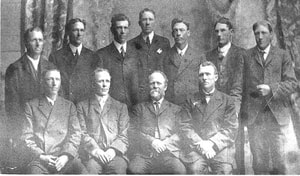
Back (L-R): Milton, David, Joseph, Lynn, Henry, Jesse, Frederick,
Front (L-R): George, William, John Lye, John James.
|
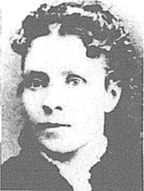
Sarah Ann Phillips Smith
|

Hannah Simmons
|
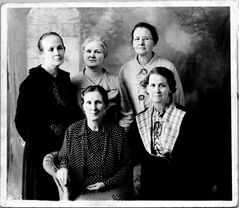
Back (L-R): Mary, Isabella, Jehzeel, Front (L-R): Sarah, Ada.
|
OCCUPATION AND SKILLS
John ran a shoemaker and harness shop on main street in Magrath. He led the church choir in Lehi and he was the first choir director in Magrath. He served on the School Board, and was the Village Overseer policing the community for a number of years. He planted many trees and flowers to beautify his home and the community. Sarah, meanwhile, continued to teach her children to pray and to love the gospel of Jesus Christ.
INTERESTING
When he was a small child, John's mother sang to him, and he sang back to her. In that way he learned the tunes which made him a very sought-after singer. As a small boy, he was taken to sing for the soldiers on their way to the Crimean war. His clear, strong soprano singing, "Farewell Mother, you may never press me to your heart again," touched even the sternest heart so that there was not a dry eye in the house.
